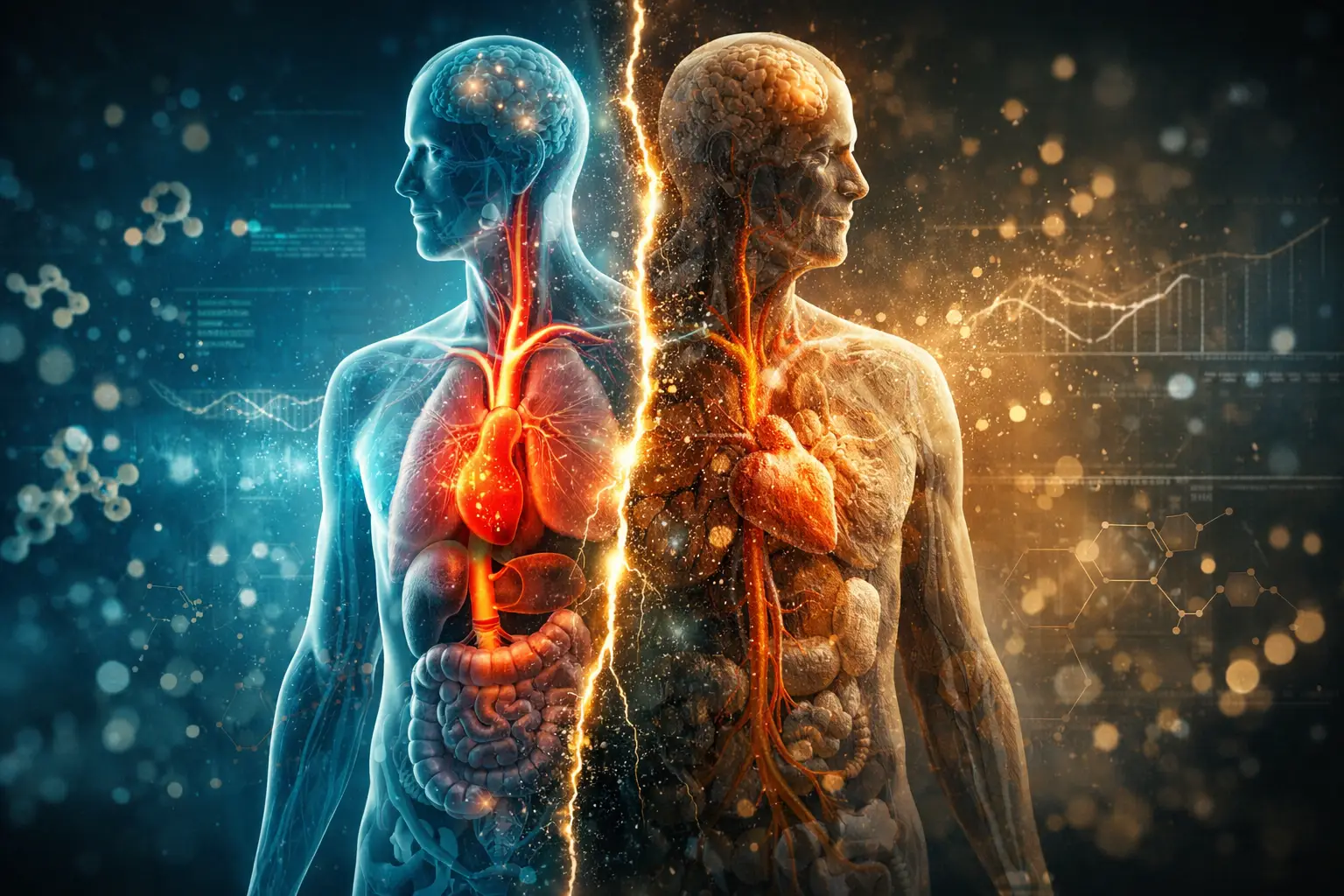
With each passing day, we grow a little older. But the passage of time may be linear while the process of human aging is not. Rather than a steady, gradual transition, the body staggers through distinct biological phases, the rapid growth of childhood, the relative plateau of early adulthood, and then, according to a landmark new study, a sharp acceleration somewhere around the age of 50.
Until now, scientists had only a limited understanding of how individual organs age at the molecular level. That gap has just been filled in remarkable detail.
A First-of-Its-Kind Protein Atlas
Published in the prestigious journal Cell on July 25, 2025, the study from a team led by researchers at the Chinese Academy of Sciences represents the first-ever comprehensive atlas of how proteins change across human tissues over five decades of life. The researchers used ultra-sensitive mass spectrometry technology combined with machine learning algorithms to build what they describe as a "panoramic dynamic landscape" of the body's aging process, viewed entirely through the lens of proteins.
Proteins are the workhorses of the human body. They carry oxygen in the blood, defend against infection, regulate hormone signals, repair damaged tissue, and catalyze almost every chemical reaction keeping us alive. There are tens of thousands of distinct proteins in the body, and changes in their levels and behavior are among the most reliable indicators of what is happening inside our cells. In short, proteins don't just reflect aging; in many cases, they drive it.
"Based on aging-associated protein changes, we developed tissue-specific proteomic age clocks and characterized organ-level aging trajectories," wrote the team, led by Dr. Guanghui Liu from the Institute of Zoology at the Chinese Academy of Sciences, along with collaborators from the National Center for Biotechnology Information, West China Hospital at Sichuan University, and several other institutions. "Temporal analysis revealed an aging inflection around age 50, with blood vessels being a tissue that ages early and is markedly susceptible to aging."
Across the entire dataset, the team identified 12,771 distinct proteins, establishing organ-specific expression features for each tissue studied.
How the Study Was Conducted
To map aging at the organ level, the research team collected tissue samples from 76 organ donors of Chinese ancestry, aged between 14 and 68, all of whom had died from accidental traumatic brain injury. Blood samples were collected alongside the tissue samples to broaden the dataset.
In total, the study analyzed 516 samples drawn from 13 different tissues, representing seven major body systems:
Cardiovascular, heart and aorta
Digestive, liver, pancreas, and intestine
Immune, spleen and lymph nodes
Endocrine, adrenal glands and white adipose tissue (body fat)
Respiratory, lungs
Integumentary, skin
Musculoskeletal, muscle
For each sample, the team catalogued all proteins present, carefully recording how their levels changed as donor age increased. They also conducted transcriptomic profiling, examining the messenger RNA (mRNA) instructions used to manufacture proteins, and histological analysis, meaning they examined the physical structure of tissues under microscopes. This multi-layered approach allowed the researchers to trace not just what proteins were present but also how efficiently the body was producing and maintaining them.
The team then cross-referenced their findings against a database of diseases and their associated genes, discovering that the expression of 48 disease-associated proteins increases with age. These include proteins linked to cardiovascular disease, tissue fibrosis, fatty liver disease, and liver-related tumours, a finding that puts the biology of aging in direct conversation with some of the world's most common causes of death.
The Turning Point Around Age 50
The study's most striking headline finding is the identification of a clear inflection point in the aging process, occurring around age 50. Before this point, the body's organs age at a relatively measured pace. After it, the trajectory steepens noticeably across multiple systems at once.
The most pronounced changes were observed between the ages of 45 and 55, a ten-year window during which many tissues undergo what researchers call "substantial proteomic remodelling"; essentially, a widespread reshuffling of which proteins are active, in what quantities, and how effectively they perform their jobs.
This is not, importantly, simply about getting a few more grey hairs or needing reading glasses. The changes documented here are happening at the molecular level, inside tissues themselves, altering how organs function and how well they can repair themselves.
It is worth noting that this finding builds on earlier work. A 2024 study from Stanford University had identified two distinct peaks of accelerated aging in the human body, one around age 44 and another around age 60, based on analysis of blood molecules. The new research from the Chinese Academy of Sciences introduces a third point of accelerated aging at age 50, indicating that human aging happens in stages and affects different organs over many years.
Blood Vessels: The Earliest and Most Vulnerable Target
Of all the organs examined, the aorta, the body's largest blood vessel, running from the heart down through the chest and abdomen, showed the most pronounced and continuous proteomic changes across the entire lifespan. Even among relatively young adult donors, the aorta was already exhibiting signs of protein-level aging, making it not just one of the earliest to change but also the most consistently affected organ in the dataset.
The researchers describe blood vessels as an "aging hub", a system whose deterioration appears to ripple outward and accelerate decline in other organs. This is biologically intuitive: blood vessels are responsible for delivering oxygen and nutrients to every tissue in the body. When they stiffen, narrow, or lose their functional integrity, every organ downstream pays a price. It may help explain why cardiovascular disease is the leading cause of death worldwide and why maintaining a healthy circulatory system is so consistently associated with healthier aging more broadly.
The vascular changes the team observed were specifically linked to inflammation and tissue damage, two processes that become self-reinforcing over time. Inflamed blood vessel walls attract immune cells, which cause further damage, which triggers more inflammation, gradually degrading the vessel's structure and its ability to regulate blood flow.
The Adrenal Gland: Aging Starts Earlier Than You Think
While the headline inflection point is around 50, one striking finding from the study is that certain organs begin showing meaningful protein-level changes much earlier. The adrenal glands, small, pyramid-shaped organs that sit atop the kidneys and are responsible for producing critical hormones including adrenaline, cortisol, and aldosterone, showed detectable signs of proteomic aging as early as age 30.
This finding resonated with other researchers in the field. Michael Snyder, a geneticist at Stanford University School of Medicine, noted that this tracks well with existing data on adrenal function. The adrenal glands regulate the body's stress response, blood pressure, metabolism, and immune function, and early changes in these organs could have cascading effects across multiple systems long before more obvious signs of aging appear.
The Spleen, Pancreas, and a Breakdown in Communication
Beyond the aorta, two other organs stood out for their sustained and continuous patterns of change: the spleen and the pancreas.
The spleen, part of the immune system, filters blood, destroys old red blood cells, and helps mount defenses against infection. Its continuous proteomic remodeling suggests that immune function is not static across adulthood but undergoes meaningful shifts that may partly explain why older adults are more susceptible to infections and less responsive to vaccines.
The pancreas, tucked behind the stomach in the abdomen, is responsible for producing digestive enzymes that break down food, as well as hormones like insulin and glucagon that regulate blood sugar. Deterioration here has a direct line to conditions like type 2 diabetes, which increases sharply in prevalence after middle age and is now a global health crisis affecting hundreds of millions of people.
One particularly significant technical finding involved what scientists call the transcriptome-proteome relationship. Normally, cells produce proteins by reading mRNA instructions, a messenger molecule that carries the genetic blueprint from the DNA in a cell's nucleus to the protein-building machinery in its cytoplasm. In younger tissues, the levels of mRNA and the proteins they encode tend to correlate closely. But the study found that this correlation decreases significantly with age, particularly in the spleen, muscles, and lymph nodes.
In simple terms, older cells are increasingly poor at following their own instructions. The blueprint exists, but the factory is failing to read it accurately. This "decoupling" between mRNA and protein production is a sign of a deeper breakdown in what biologists call proteostasis, the cell's ability to maintain a healthy, well-balanced inventory of proteins.
When Protein Factories Break Down
The concept of proteostasis is central to understanding what this study found. Think of a healthy cell as a well-run factory: raw materials (amino acids) come in, machinery (ribosomes) reads the instructions (mRNA) and assembles the product (proteins), quality controllers (molecular chaperones) check that each protein is folded correctly into its working shape, and waste disposal systems (proteasomes and autophagy pathways) remove damaged or obsolete proteins before they cause harm.
With age, this system breaks down at every stage. The study documented:
Decreased synthesis capacity: ribosomal proteins and amino acid synthases declined across multiple tissues, meaning cells were producing fewer proteins overall.
Folding and transport failures: molecular chaperones, the quality-control proteins responsible for ensuring correct protein folding, decreased significantly.
Accumulation of waste: amyloid proteins and immunoglobulins (immune proteins) built up abnormally in multiple organs, forming what the researchers describe as an "amyloid protein-immunoglobulin-complement inflammatory signalling axis." In plain English: old, misfolded proteins pile up, attract immune activity, and generate chronic, low-grade inflammation throughout the body.
This last point is of particular interest given what science already knows about neurodegenerative diseases. The accumulation of misfolded amyloid proteins in the brain is a hallmark of Alzheimer's disease. The new study suggests that similar processes are happening more broadly across the body's organs as we age, not just in the brain.
The Protein That Accelerates Aging: GAS6
One of the most actionable findings to emerge from the study is the identification of a specific protein called GAS6 (Growth Arrest-Specific 6) as a key driver of vascular and systemic aging. GAS6 is a signaling protein that plays roles in cell survival, inflammation, and the clearance of dead cells. The study found that GAS6 levels in the blood increase with age and are strongly associated with both vascular aging and broader aging across the body.
To directly test whether GAS6 actively causes aging rather than merely accompanying it, the researchers conducted an experiment using mice. They isolated the protein from the aortas of aged mice and injected it into young mice. The results were striking: the treated animals showed clear signs of accelerated aging, including the following:
Reduced physical performance across multiple measures
Decreased grip strength, a widely used proxy for musculoskeletal health
Lower endurance on physical tests
Poorer balance and coordination
Prominent markers of vascular aging in their blood vessels
This experiment demonstrates something important: GAS6 is not just a symptom of aging but an active participant in it. Proteins circulating in the blood — released by aging tissues — can travel to healthy tissues and accelerate their decline. The idea that aging can spread through circulating signals offers both a warning and an opportunity: if specific proteins can be blocked or neutralized, it may be possible to slow the process.
Blood Tests as a Window Into Organ Age
Another significant implication of the study lies in its potential to transform how doctors assess the health of aging bodies. The researchers found that many changes in blood protein levels closely reflect what is happening inside individual organs, meaning a blood test could, in principle, estimate the biological age of specific tissues rather than just the body as a whole.
This is a meaningful distinction. Two 55-year-olds with identical chronological ages may have very different biological ages in their aortas, livers, or immune systems, depending on their genetics, lifestyle, and history of disease. Being able to identify which organs are aging faster than expected could allow for earlier, more targeted intervention, treating the pancreas of someone at elevated diabetes risk, for example, or protecting the arteries of someone whose vascular aging clock is running fast, before serious disease develops.
What This Means for Healthy Aging
The researchers are clear that understanding the molecular mechanics of aging is ultimately in service of doing something about it. Their atlas, they write, is "poised to construct a comprehensive multi-tissue proteomic framework spanning 50 years of the entire human aging process, elucidating the mechanisms behind proteostasis imbalance in aged organs and revealing both universal and tissue-specific aging patterns."
"These insights," they add, "may facilitate the development of targeted interventions for aging and age-related diseases, paving the way to improve the health of older adults."
Among the potential interventions the study points toward:
Clearing senescent cells using CAR-T cell therapies that target membrane proteins like GPNMB (a marker found on aged, non-dividing cells that linger in tissues and generate inflammation).
Blocking pro-aging circulating proteins such as GAS6 using antibody-based treatments essentially neutralizing the messengers that spread aging signals from one organ to another.
An early intervention window: the data suggest that protecting blood vessels before the age of 50 may be one of the most effective strategies for delaying systemic aging across the body.
The finding that vascular aging begins in measurable form as early as the late twenties and early thirties adds urgency to this last point. The window for meaningful prevention is not just in middle age; it begins in young adulthood.
Conclusion: Aging Is Not One Story But Many
Perhaps the most important conceptual shift offered by this research is the move away from thinking of aging as a single, uniform process. The body does not age all at once, in all its parts, at the same pace. Different organs run on different biological clocks, governed by different protein networks, sensitive to different stresses, and responsive to different interventions.
What the Chinese Academy of Sciences team has produced is, in effect, a map of those clocks, the first detailed, tissue-by-tissue account of how the human body changes over five decades at the level of its fundamental molecular machinery. The turning point at age 50 is real, measurable, and consequential. But it is also, potentially, something that can be anticipated, prepared for, and perhaps one day, significantly delayed.
Understanding that your body shifts biological gears around 50 is not a cause for alarm. It is, rather, an unusually specific piece of knowledge about your own biology, and an opportunity to make the most of the years before and after that threshold.